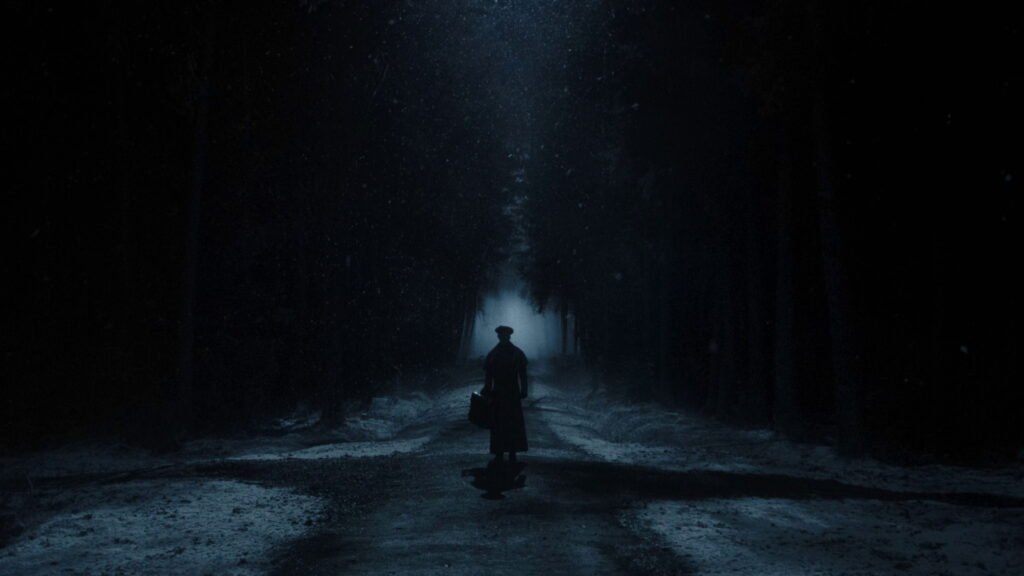
With Nosferatu (2024), Robert Eggers revisits F.W. Murnau’s 1922 masterpiece for the third time in the film’s long afterlife, delivering its most immersive and cinematic incarnation yet. Eggers’ mastery of shadows and light is truly remarkable, creating a film with stunningly composed and beautiful cinematography. The film masterfully sets up Nosferatu’s shadowy nature with a brilliantly crafted opening scene, utilising shadows cast on a curtain—a moment that immediately had me hooked!
Watching the original Nosferatu, I was struck by how effectively the carriage sequence used negative color to create a ghostly atmosphere. I doubted whether that feeling could be replicated in a color remake without overdoing it, but I must say this Nosferatu has executed it with remarkable subtlety and finesse.
The slow, gradual reveal of Count Orlok’s face was well paced, building suspense and giving Nosferatu the enigmatic aura it truly deserves!
However, I did find Count Orlok’s arrival on the ship more impactful in the silent film. That said, the confession to Thomas was a fantastic addition in this version (though I can’t recall if it was present in the silent film).
I particularly appreciated how Count Orlok diverges from the vampires of modern cinema, instead embracing the terrifying and monstrous roots of the legend. Robert Eggers’ deep respect for the original “Nosferatu” is evident through the film’s beautifully crafted homages. This might just be my favorite vampire film to date!