I am Cuba and Memories of Underdevelopment : Two perspectives on Cuban Revolution


From the Sierra Maestra peasant whose dignity depends on embracing the revolution, to the bourgeois intellectual who resists it and drifts toward erasure, I Am Cuba and Memories of Underdevelopment trace the revolution’s pulse. While I Am Cuba imagines the revolution’s birth through sweeping representations of collective struggle and the exposure of institutionalized inequalities, Memories of Underdevelopment views post-revolutionary Cuba through the lens of the bourgeois neo-liberal intellect, whose dilemma is held at their inherited privilege and a society that has moved on. This separation sets in a more profound essence of a society, where the notions of class and national identity evolve, thereby leaving the bourgeois self-destruct and unable to evolve the same. This essay reads these films as a dialectic representation of the revolution: the euphoria and the disillusionment. Through close analysis of specific sequences, I analyze how each film translates class position and national identity into visual grammar: Kalatozov’s fluid 9mm camera renders the collective movement of revolutionary Cuba, while Alea’s estrangement aesthetics expose the alienation 3 of the bourgeois intellectual in a revolutionary society, showcasing the evolution of Cuban self-understanding during the 1960s.

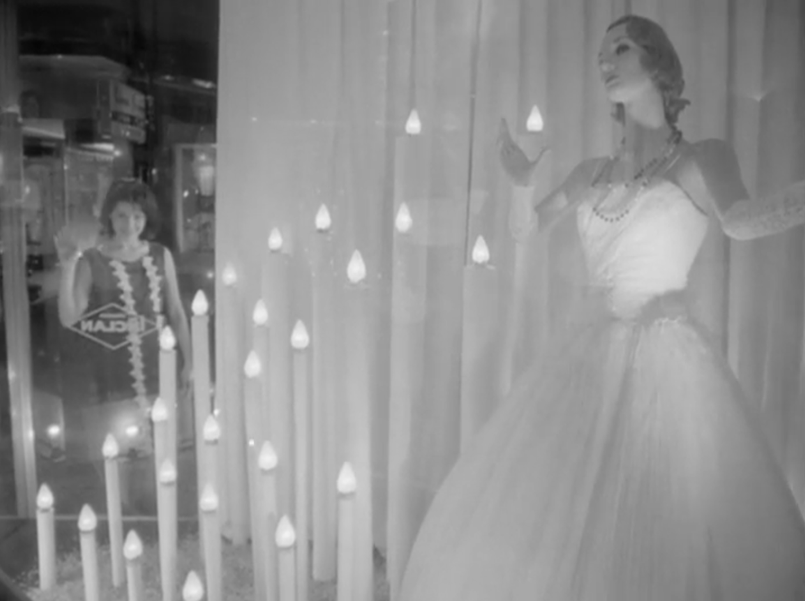
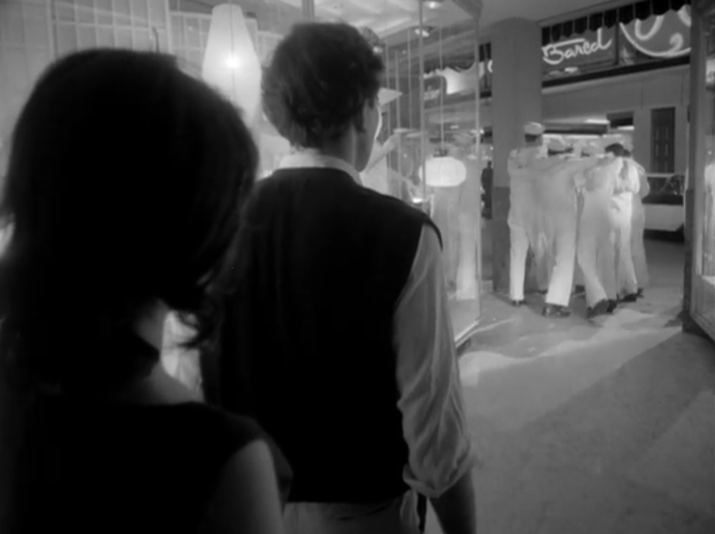
Mikhail Kalatozov’s I Am Cuba (1964), a Soviet–Cuban co-production, is a visually stylistic exploration on class struggle and revolutionary awakening in pre-revolutionary Cuba. I Am Cuba unfolds across four novellas: the first two explore the injustices and inequalities fueling revolutionary unrest, while the final two depict the collective uprising of diverse social groups. A key moment illustrating the film’s exploration of class in revolutionary Cuba occurs in the third novella—a working-class woman finds safety behind a young revolutionary named Enrique while being chased by elite white bourgeois men. The scene vividly illustrates the lingering class hierarchies of pre-revolutionary Cuba: the woman embodies those excluded from social and economic power, while her attackers who notably pass by women of their own class unharmed enact the entrenched privileges of the old elite. The revolutionary intervention is not just physical but symbolic, in its representation of the new order and the revolutionary ideal of liberating the marginalized. The camera frames [03] the revolution as the ethical embodiment of social justice by positioning itself behind Enrique, visually aligning the spectator’s gaze with his class-conscious perspective. In the closing shot [01], the mise-en-scène places the working-class woman smiling alongside a mannequin representing elite white women, both occupying the same visual plane. This shot visually indicates that through revolutionary intervention, class divisions can be challenged and social equality attained.

Figure 01

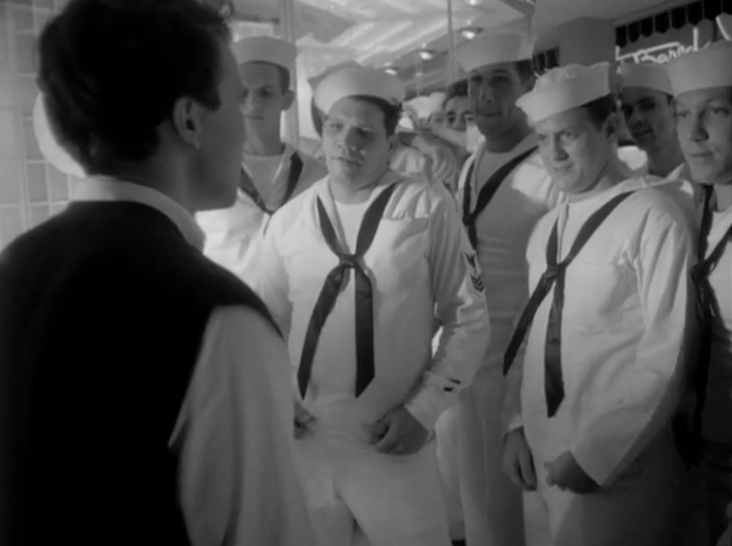
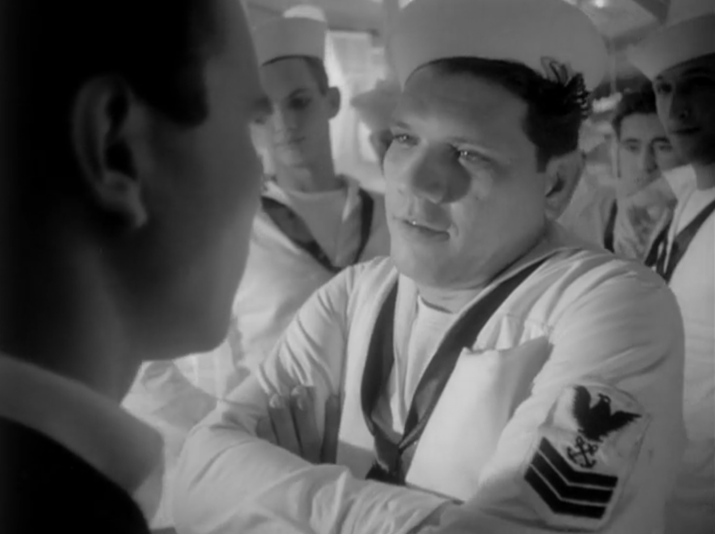
Not only does the rapid cuts during the chase intensify the terrified state, but they also echo a sense of chaos and instability, reflecting the fractured social order of pre-revolutionary Cuba. When Enrique intervenes, the tempo shifts—the scene settles into a long, continuous take, grounding the chaos. This sustained shot contrasts the earlier fragmentation, visually embodying the stabilizing and unifying force of ‘revolutionary consciousness’ within a stratified world. The chase unfolds through a series of close-ups that heighten the woman’s fear and the tyrannical capacity of the elite, through its use of ultra wide-angle lens, which produces claustrophobic close ups [02]. When she finds safety behind Enrique, the camera follows the elite’s hesitant approach with a slow dolly from wide [03] to close-up [04]. Yet, unlike before, the elite retreats, and the frame widens again [05]. Although this scene reflects the prevailing class hierarchies and revolutionary power, it also invites a closer look at the social inequalities that ultimately fueled the drive to revolt.


Figure 02
Figure 03
Figure 04
Figure 05

“The political system, with censorship, repression, and corruption, had made the Batista regime extremely unpopular. Social inequality between classes was great, and this generated expectations and resentment among the poor” (West 1997, pp.193). This atmosphere is vividly rendered in the third novella of I Am Cuba: Batista’s opulent mansion embodies corruption, the assassination of the journalist revealing Fidel Castro’s survival signals censorship, and the killings of revolutionaries reveal systemic repression. I Am Cuba conveys people’s collective outrage and emerging unity of Cuban society during the revolution indirectly through the actions of Castro’s followers, depicted in three marches: the symbolic march with the pigeon, the funeral procession through Havana’s streets, and the final ascent of Mariano and others from the mountains. In these marches, we see peasants, students, and workers marching with a revolutionary spirit, one that was “characterized by the national drive toward radical break from elitism” (Thakkar 2014, pp.85). Through these images, the film articulates how revolutionary national identity was constructed from shared movements against inequality and subjugation, as the revolution becomes the space in which class differences cease into one movement for liberation.

The funeral procession, with thousands marching in solidarity, vividly captures the formation of national unity, by creating a “continuum between the specific view of the marchers and the panoramic gaze of the camera from on high” (Oukaderova, pp.11), exemplifying what Amit Thakkar describes as the camera’s “fluid, floating movement” (Thakkar 2014, pp.96). The camera floats through the streets of Havana in long tracking shots, in which Cubans expressing solidarity from their balconies and cigar factory workers draping a Cuban flag can all be seen within a single shot. This striking long take conveys an “all-embracing spatial cognition”, capturing the unity of the masses, marching for an end to the regime (Oukaderova, pp.11). Through its camera work, I Am Cuba draws the spectator into the revolutionary masses, showing them “from [the] inside” so that viewers not only develop a sense of solidarity but also feel as if they are marching alongside the crowd (Rogatchevski, pp.32). Hence, the film’s narrative and imagery reinforce Alan West’s observation that “Castro was able to gather all major sectors of society to overthrow the Batista tyranny” (West 1997, pp.193).

Rather than capturing the revolutionary fervor of the Cuban people, Tomás Gutiérrez Alea’s Memories of Underdevelopment (1968) turns inward to examine post-revolutionary Cuba through the alienated consciousness of a bourgeois intellectual unable to adapt to the new social order. Memories of Underdevelopment uses the ‘process of making a film as a way of looking at the formation of revolutionary consciousness—or more accurately, since we are not in the never-never land of socialist realism, at the failure of its formation’ (Nowell-Smith 2013, pp.189). Alea rejects the certainties of revolutionary triumph, favoring a cinema that exposes contradictions rather than smoothing them over, one that ‘suggest improvements through aesthetics,’ which he defined as ‘dialectical’ (Elena, Díaz, 2003, pp.102). His aim is not to depict ideology but to explore the dialectic between ‘individual consciousness and historical circumstance’ (Amaya 2010, pp.121). In Memories of Underdevelopment, this dialectic is embodied in Sergio’s fractured perspective. He drifts between a hopeful belief that he belongs in revolutionary Cuba and a “masochistic” sense of himself as too “irredeemably bourgeois” to ever fit in (Nowell-Smith 2013, pp.189). Elena, one of his lovers, captures this emptiness when she tells him, “You are nothing,” encapsulating his loss of identity in post-revolutionary Cuba.

Sergio’s disintegration reaches its peak in the airport scene, where he watches Pablo depart behind a glass barrier, which acts as a literal divide between him and his bourgeois past. Although the moment he can no longer hear Pablo marks his growing detachment, he cannot erase the class identity that shaped him. The flashbacks that follow — of the priestly school, wealthy mansions, and brothel — reveal how deeply this world of “unequal class” still defines his consciousness (Shaw 2003, pp.16). The mise-en-scène reinforces this detachment: the spacious interiors and reflective surfaces emphasize his isolation, while the telescope he uses to observe the revolution below visually marks his separation from the new Cuba. Alea (2003) points out that Sergio is always walking against the current of the crowd, a motif most evident when he moves opposite a political procession, visually embodying his alienation and inability to participate in the collective construction of national identity (Shaw 2003, pp.14). Sergio’s lingering privilege is revealed through his unearned rent income and luxurious apartment, all sustained by the remnants of the old bourgeois order. Alea suggests that true transformation can only come when he recognizes his place within these “power relations” and redirects his privilege toward the collective cause (Shaw 2003, pp.16).

Using Brecht’s idea of “estrangement effects,” Alea compels viewers to step back from the bourgeois protagonist and view him critically (Carl 2018, pp.101). Influenced by Godard, he interweaves real events—such as the Bay of Pigs invasion, scenes of poverty, and the burning of El Encanto— into the narrative, creating a documentary hybrid that disrupts cinematic illusion and prompts a critical, rather than purely emotional, engagement with the film. Alea, throughout the film, shifts from moving image to a collage of photographs of Sergio’s lovers, prompting a critical reflection on how he objectifies them. Elena, the working-class woman he tries to possess through his privilege, becomes to him a “sign of underdevelopment,” whereas Hannah, the European woman is idealized as “more mature than the underdeveloped girls here [Cuba]”. Sergio’s understanding of development and underdevelopment is “tainted by a value system that is alien to the majority of the Cuban people” (Shaw 2003, pp.11). This leaves spectators feeling caught in a trap, having “identified” with a character who ultimately destroys himself and is reduced to “nothing” (Shaw 2003, pp.13), prompting viewers engaged in a “hermeneutics of decolonization” to recognize the dangers of uncritically identifying with Sergio (Amaya 2010, pp.122). The film thus creates an awareness of the lingering class inequalities and social elitism he represents, which allows the audience to recognize “historical oppression” and “unequal power relations between the classes” as the structural causes of underdevelopment (Shaw 2003, pp.30). This realization was central to post-revolutionary Cuba, where the state aimed to create “new classes of citizens” in line with the idea of the “New Man” (Amaya 2010, pp.34,35). The revolutionary government established the ICAIC, tasking Cuban cultural workers with producing texts that could “deepen the revolutionary spirit” and form the new revolutionary citizen (Amaya 2010, pp.09).

As one of the founders of ICAIC, Alea contributed to this project through Memories of Underdevelopment, a film that seeks to cultivate class consciousness by uprooting the ideological weeds that persists in post-revolutionary Cuba. The film highlights what no longer holds relevance in the new society, using Sergio and his bourgeois class to show those whose privilege and worldview have no place in revolutionary Cuba. His solitary modernist apartment and his eroticized but disconnected relationships with women (especially Elena) expose him as a remnant of a colonial, patriarchal consciousness. His self-destruction provides an insight into how the bourgeois’ identity tussles to coexist with the moral and 8 social order of the revolution. While Memories of Underdevelopment and I Am Cuba both seek to build class consciousness by revealing existing hierarchies, this vision is deeply shaped by Marxist thought, an ideology central to Cuba’s redefinition of class and national identity.

As the prominent Marxist Cuban philosopher Fernando Martinez Heredia recalled, “along with Soviet oil and weapons we received the products and influence of the Soviet theorized ideology known as Marxism-Leninism… Soviet… communist texts were widely read” (Rogatchevski 2020, pp.41). This ideological framework was central to the vision of “New Cuba” under Castro (Shaw 2003, pp.13), who openly identified as a “Marxist-Leninist” (West 1953, pp.194). It also informs the worlds depicted in both I Am Cuba and Memories of Underdevelopment, shaping their portrayals of class and national identity. In I Am Cuba, the police storm the revolutionary office as they prepare to publish that Castro is alive, discovering the book ‘Lenin: The State and Revolution’ which the revolutionaries claim as “ours”. In the final novella, Marxist-Leninist ideals are evident in Alberto’s conversation with Mariano, asking, “Is this land you sow yours?” and “Wouldn’t you like to have a school here, shoes for your kids?” These examples show the clear influence of Marxist-Leninist thought on the revolution, shaping Cuban national identity as fundamentally “socialist” (West 1953, pp.194). In Memories of Underdevelopment, Sergio passes a school named after Lenin as he strolls through Havana, signaling the continued influence of Leninist ideology in shaping Cuban national identity after the revolution.

The two films can be set as phases of the moon—while I am Cuba portrays revolutionary Cuba, grappling with recognizing class injustice, Memories of Underdevelopment shows post-revolutionary Cuba, confronting the skeletons of colonialism. National identity as a collective awakening, paving way to a shared consciousness was the crux of I Am Cuba. Kalatozov captures the revolutionary spirit through long takes, sweeping tracking shots, fluid camera movement, and the use of an extreme wide-angle lens. Using Second Cinema aesthetics, Alea portrays the bourgeois intellectual striving to “live like a European”, as Sergio himself admits; bringing us into how Memories of Underdevelopment is about reshaping Cuban identity leaving no space for victimizing the bourgeois. Newsreel footage and a mise-en-scène saturated with symbols of recent conflict expose class divisions and 9 revolutionary transformation, while Sergio’s distant balcony view captures the distance between the remnants of the pre-revolutionary bourgeoisie and the newly remade Cuban nation. Using radically different cinematic languages, I Am Cuba and Memories of Underdevelopment chart the evolution of Cuban class consciousness—one through the fluid movement of the long take, the other by exposing the imperceptible cuts, detrimental to its development.

Bibliography

1) Rogatchevski, Andrei. ‘Exporting cinemarxism in the 1960s: The case of Soy Cuba Mazierska’, E, & Kristensen, L (eds) 2020, Third Cinema, World Cinema and Marxism, Bloomsbury

Academic & Professional, New York. Available at: https://ebookcentral.proquest.com/lib/kentuk/detail.action?docID=6262765 [Accessed: 01/11/25].

2) West, Alan. (1953) Tropics of History: Cuba Imagined. Edition. London: Bergin & Garvey.

3) Thakkar, Amit. (2014) Who Is Cuba?: Dispersed Protagonism and Heteroglossia in Soy Cuba/I Am Cuba. Framework, 55(1), pp. 83-101.

4) Amaya, Hector. (2010) Screening Cuba: film criticism as political performance during the Cold War. Urbana : University of Illinois Press.

5) Oukaderova, Lida. (2014) ‘I am Cuba and the Space of Revolution’, Film & History: An Interdisciplinary Journal, 2, 4-21.

6) Nowell-Smith, Geoffrey. (2013) Making Waves. New York, New York : Bloomsbury Academic, 2013.

7) Elena, Alberto. and Díaz, Marina. (2003) The Cinema of Latina America. London : Wallflower Press.

8) Shaw, Deborah. (2003) Contemporary cinema of Latin America : ten key films. New York ; London : Continuum.

9) Plantinga, Carl. (2018) Screen Stories: Emotion and the Ethics of Engagement. Available at: https://academic-oup-com.chain.kent.ac.uk/book/1376/chapter/14068945 (Accessed: 05/11/12).
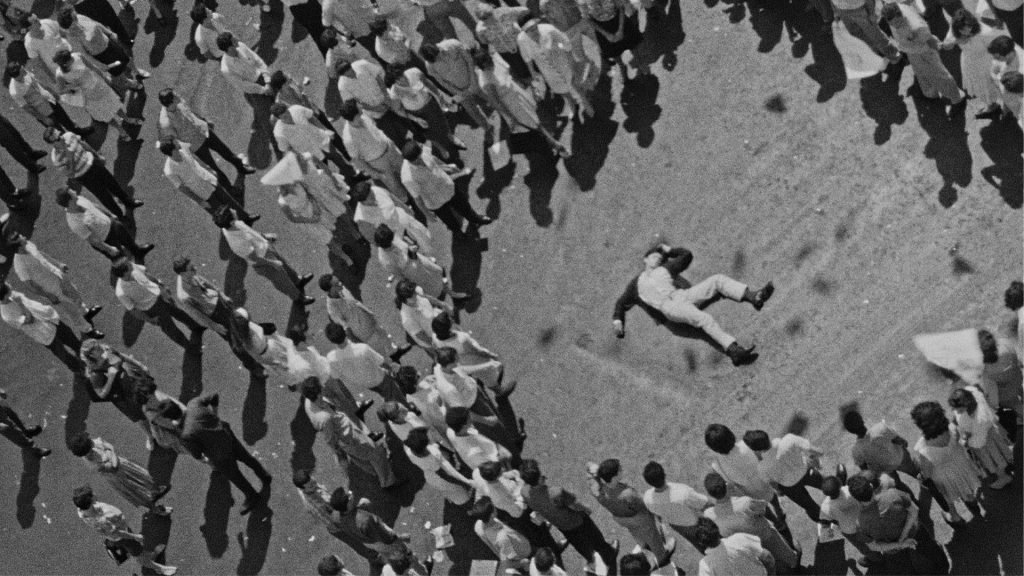
 

Figure 02
Figure 03
Figure 04
Figure 05

“The political system, with censorship, repression, and corruption, had made the Batista regime extremely unpopular. Social inequality between classes was great, and this generated expectations and resentment among the poor” (West 1997, pp.193). This atmosphere is vividly rendered in the third novella of I Am Cuba: Batista’s opulent mansion embodies corruption, the assassination of the journalist revealing Fidel Castro’s survival signals censorship, and the killings of revolutionaries reveal systemic repression. I Am Cuba conveys people’s collective outrage and emerging unity of Cuban society during the revolution indirectly through the actions of Castro’s followers, depicted in three marches: the symbolic march with the pigeon, the funeral procession through Havana’s streets, and the final ascent of Mariano and others from the mountains. In these marches, we see peasants, students, and workers marching with a revolutionary spirit, one that was “characterized by the national drive toward radical break from elitism” (Thakkar 2014, pp.85). Through these images, the film articulates how revolutionary national identity was constructed from shared movements against inequality and subjugation, as the revolution becomes the space in which class differences cease into one movement for liberation.

The funeral procession, with thousands marching in solidarity, vividly captures the formation of national unity, by creating a “continuum between the specific view of the marchers and the panoramic gaze of the camera from on high” (Oukaderova, pp.11), exemplifying what Amit Thakkar describes as the camera’s “fluid, floating movement” (Thakkar 2014, pp.96). The camera floats through the streets of Havana in long tracking shots, in which Cubans expressing solidarity from their balconies and cigar factory workers draping a Cuban flag can all be seen within a single shot. This striking long take conveys an “all-embracing spatial cognition”, capturing the unity of the masses, marching for an end to the regime (Oukaderova, pp.11). Through its camera work, I Am Cuba draws the spectator into the revolutionary masses, showing them “from [the] inside” so that viewers not only develop a sense of solidarity but also feel as if they are marching alongside the crowd (Rogatchevski, pp.32). Hence, the film’s narrative and imagery reinforce Alan West’s observation that “Castro was able to gather all major sectors of society to overthrow the Batista tyranny” (West 1997, pp.193).

Rather than capturing the revolutionary fervor of the Cuban people, Tomás Gutiérrez Alea’s Memories of Underdevelopment (1968) turns inward to examine post-revolutionary Cuba through the alienated consciousness of a bourgeois intellectual unable to adapt to the new social order. Memories of Underdevelopment uses the ‘process of making a film as a way of looking at the formation of revolutionary consciousness—or more accurately, since we are not in the never-never land of socialist realism, at the failure of its formation’ (Nowell-Smith 2013, pp.189). Alea rejects the certainties of revolutionary triumph, favoring a cinema that exposes contradictions rather than smoothing them over, one that ‘suggest improvements through aesthetics,’ which he defined as ‘dialectical’ (Elena, Díaz, 2003, pp.102). His aim is not to depict ideology but to explore the dialectic between ‘individual consciousness and historical circumstance’ (Amaya 2010, pp.121). In Memories of Underdevelopment, this dialectic is embodied in Sergio’s fractured perspective. He drifts between a hopeful belief that he belongs in revolutionary Cuba and a “masochistic” sense of himself as too “irredeemably bourgeois” to ever fit in (Nowell-Smith 2013, pp.189). Elena, one of his lovers, captures this emptiness when she tells him, “You are nothing,” encapsulating his loss of identity in post-revolutionary Cuba.

Sergio’s disintegration reaches its peak in the airport scene, where he watches Pablo depart behind a glass barrier, which acts as a literal divide between him and his bourgeois past. Although the moment he can no longer hear Pablo marks his growing detachment, he cannot erase the class identity that shaped him. The flashbacks that follow — of the priestly school, wealthy mansions, and brothel — reveal how deeply this world of “unequal class” still defines his consciousness (Shaw 2003, pp.16). The mise-en-scène reinforces this detachment: the spacious interiors and reflective surfaces emphasize his isolation, while the telescope he uses to observe the revolution below visually marks his separation from the new Cuba. Alea (2003) points out that Sergio is always walking against the current of the crowd, a motif most evident when he moves opposite a political procession, visually embodying his alienation and inability to participate in the collective construction of national identity (Shaw 2003, pp.14). Sergio’s lingering privilege is revealed through his unearned rent income and luxurious apartment, all sustained by the remnants of the old bourgeois order. Alea suggests that true transformation can only come when he recognizes his place within these “power relations” and redirects his privilege toward the collective cause (Shaw 2003, pp.16).

Using Brecht’s idea of “estrangement effects,” Alea compels viewers to step back from the bourgeois protagonist and view him critically (Carl 2018, pp.101). Influenced by Godard, he interweaves real events—such as the Bay of Pigs invasion, scenes of poverty, and the burning of El Encanto— into the narrative, creating a documentary hybrid that disrupts cinematic illusion and prompts a critical, rather than purely emotional, engagement with the film. Alea, throughout the film, shifts from moving image to a collage of photographs of Sergio’s lovers, prompting a critical reflection on how he objectifies them. Elena, the working-class woman he tries to possess through his privilege, becomes to him a “sign of underdevelopment,” whereas Hannah, the European woman is idealized as “more mature than the underdeveloped girls here [Cuba]”. Sergio’s understanding of development and underdevelopment is “tainted by a value system that is alien to the majority of the Cuban people” (Shaw 2003, pp.11). This leaves spectators feeling caught in a trap, having “identified” with a character who ultimately destroys himself and is reduced to “nothing” (Shaw 2003, pp.13), prompting viewers engaged in a “hermeneutics of decolonization” to recognize the dangers of uncritically identifying with Sergio (Amaya 2010, pp.122). The film thus creates an awareness of the lingering class inequalities and social elitism he represents, which allows the audience to recognize “historical oppression” and “unequal power relations between the classes” as the structural causes of underdevelopment (Shaw 2003, pp.30). This realization was central to post-revolutionary Cuba, where the state aimed to create “new classes of citizens” in line with the idea of the “New Man” (Amaya 2010, pp.34,35). The revolutionary government established the ICAIC, tasking Cuban cultural workers with producing texts that could “deepen the revolutionary spirit” and form the new revolutionary citizen (Amaya 2010, pp.09).

As one of the founders of ICAIC, Alea contributed to this project through Memories of Underdevelopment, a film that seeks to cultivate class consciousness by uprooting the ideological weeds that persists in post-revolutionary Cuba. The film highlights what no longer holds relevance in the new society, using Sergio and his bourgeois class to show those whose privilege and worldview have no place in revolutionary Cuba. His solitary modernist apartment and his eroticized but disconnected relationships with women (especially Elena) expose him as a remnant of a colonial, patriarchal consciousness. His self-destruction provides an insight into how the bourgeois’ identity tussles to coexist with the moral and 8 social order of the revolution. While Memories of Underdevelopment and I Am Cuba both seek to build class consciousness by revealing existing hierarchies, this vision is deeply shaped by Marxist thought, an ideology central to Cuba’s redefinition of class and national identity.

As the prominent Marxist Cuban philosopher Fernando Martinez Heredia recalled, “along with Soviet oil and weapons we received the products and influence of the Soviet theorized ideology known as Marxism-Leninism… Soviet… communist texts were widely read” (Rogatchevski 2020, pp.41). This ideological framework was central to the vision of “New Cuba” under Castro (Shaw 2003, pp.13), who openly identified as a “Marxist-Leninist” (West 1953, pp.194). It also informs the worlds depicted in both I Am Cuba and Memories of Underdevelopment, shaping their portrayals of class and national identity. In I Am Cuba, the police storm the revolutionary office as they prepare to publish that Castro is alive, discovering the book ‘Lenin: The State and Revolution’ which the revolutionaries claim as “ours”. In the final novella, Marxist-Leninist ideals are evident in Alberto’s conversation with Mariano, asking, “Is this land you sow yours?” and “Wouldn’t you like to have a school here, shoes for your kids?” These examples show the clear influence of Marxist-Leninist thought on the revolution, shaping Cuban national identity as fundamentally “socialist” (West 1953, pp.194). In Memories of Underdevelopment, Sergio passes a school named after Lenin as he strolls through Havana, signaling the continued influence of Leninist ideology in shaping Cuban national identity after the revolution.

The two films can be set as phases of the moon—while I am Cuba portrays revolutionary Cuba, grappling with recognizing class injustice, Memories of Underdevelopment shows post-revolutionary Cuba, confronting the skeletons of colonialism. National identity as a collective awakening, paving way to a shared consciousness was the crux of I Am Cuba. Kalatozov captures the revolutionary spirit through long takes, sweeping tracking shots, fluid camera movement, and the use of an extreme wide-angle lens. Using Second Cinema aesthetics, Alea portrays the bourgeois intellectual striving to “live like a European”, as Sergio himself admits; bringing us into how Memories of Underdevelopment is about reshaping Cuban identity leaving no space for victimizing the bourgeois. Newsreel footage and a mise-en-scène saturated with symbols of recent conflict expose class divisions and 9 revolutionary transformation, while Sergio’s distant balcony view captures the distance between the remnants of the pre-revolutionary bourgeoisie and the newly remade Cuban nation. Using radically different cinematic languages, I Am Cuba and Memories of Underdevelopment chart the evolution of Cuban class consciousness—one through the fluid movement of the long take, the other by exposing the imperceptible cuts, detrimental to its development.

Bibliography

1) Rogatchevski, Andrei. ‘Exporting cinemarxism in the 1960s: The case of Soy Cuba Mazierska’, E, & Kristensen, L (eds) 2020, Third Cinema, World Cinema and Marxism, Bloomsbury

Academic & Professional, New York. Available at: https://ebookcentral.proquest.com/lib/kentuk/detail.action?docID=6262765 [Accessed: 01/11/25].

2) West, Alan. (1953) Tropics of History: Cuba Imagined. Edition. London: Bergin & Garvey.

3) Thakkar, Amit. (2014) Who Is Cuba?: Dispersed Protagonism and Heteroglossia in Soy Cuba/I Am Cuba. Framework, 55(1), pp. 83-101.

4) Amaya, Hector. (2010) Screening Cuba: film criticism as political performance during the Cold War. Urbana : University of Illinois Press.

5) Oukaderova, Lida. (2014) ‘I am Cuba and the Space of Revolution’, Film & History: An Interdisciplinary Journal, 2, 4-21.

6) Nowell-Smith, Geoffrey. (2013) Making Waves. New York, New York : Bloomsbury Academic, 2013.

7) Elena, Alberto. and Díaz, Marina. (2003) The Cinema of Latina America. London : Wallflower Press.

8) Shaw, Deborah. (2003) Contemporary cinema of Latin America : ten key films. New York ; London : Continuum.

9) Plantinga, Carl. (2018) Screen Stories: Emotion and the Ethics of Engagement. Available at: https://academic-oup-com.chain.kent.ac.uk/book/1376/chapter/14068945 (Accessed: 05/11/12).