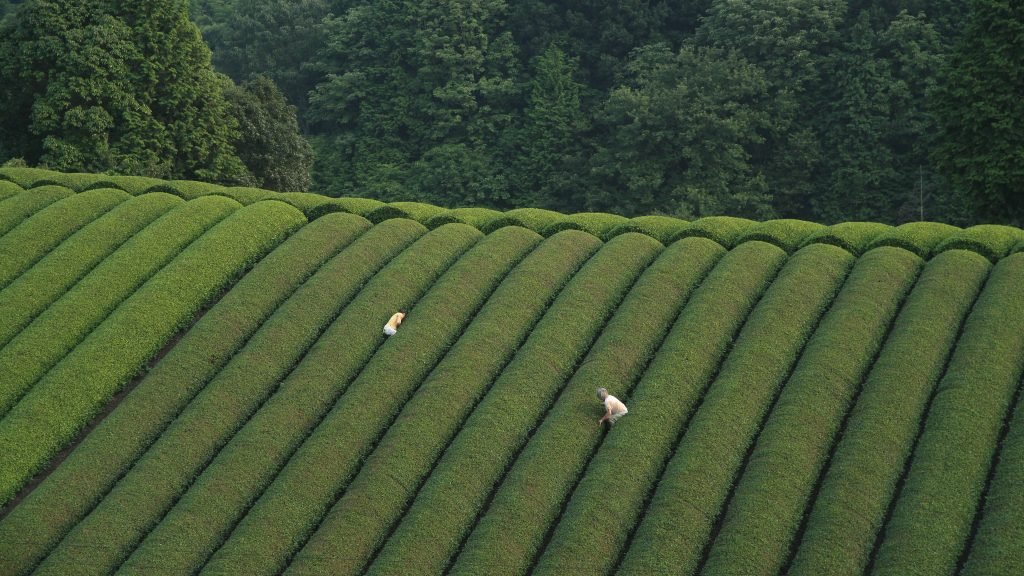
In the landscape of global art cinema, contemporary Japanese film occupies a distinctive position, marked by its meditative pace, aesthetic restraint, and emotional opacity. Since the late 1990s, directors such as Naomi Kawase, Hirokazu Kore-eda, and Ryusuke Hamaguchi have emerged as key figures in a movement often associated with slow cinema, a movement associated with minimalism, interiority, and a profound engagement with themes of memory, loss, and human connection. Their films do not merely tell stories; they create emotional and sensory spaces in which the viewer is invited to dwell rather than be led. Rather than relying on plot-driven narratives, these filmmakers employ duration, silence, and carefully constructed mise-en-scène to explore the depths of grief and the complexities of communication.
This essay critically examines three major works of contemporary Japanese art cinema: Naomi Kawase’s The Mourning Forest (2007), Hirokazu Kore-eda’s Still Walking (2008), and Ryusuke Hamaguchi’s Drive My Car (2021). Despite their formal differences, these films are united by a shared concern with the aftermath of loss and the impossibility of fully articulating emotional truth. They navigate the tension between what is said and what remains unspoken, suggesting that silence, gesture, and landscape may convey more than language ever could. In this way, they embody a uniquely Japanese aesthetic shaped by principles like ‘mono no aware’, a sensitivity to the fleeting nature of life, and ‘wabi-sabi’, which finds beauty in impermanence and imperfection.[1] The central argument of this essay is that contemporary Japanese art cinema, as exemplified by these three films, constructs a poetics of stillness through which it interrogates themes of mourning, memory, and miscommunication. By focusing on these shared thematic and aesthetic strategies, the essay will show how these works create a contemplative cinematic experience that resonates both within and beyond Japan’s cultural borders. The analysis will proceed in three parts: first, by examining the thematic centrality of grief; second, by exploring the aesthetic strategies that define the films’ visual and temporal language; and third, by analysing the films’ treatment of communication and silence as both subject and form.
One of the most persistent thematic undercurrents in contemporary Japanese art cinema is the experience of grief and mourning, rendered not through overt emotional expression but through subtle, sustained rhythms of absence and presence. Rather than focusing on climactic moments of sorrow, these films attend to the afterlife of trauma—the slow, recursive process of remembering and enduring. This approach reflects the Japanese aesthetic of mono no aware, an emotional awareness of life’s impermanence, where fleeting beauty is inseparable from a gentle, underlying sorrow. In The Mourning Forest, Still Walking, and Drive My Car, mourning is not an isolated psychological event but a lingering, spatialized presence that permeates the everyday and reshapes how the characters relate to their environments and to each other.
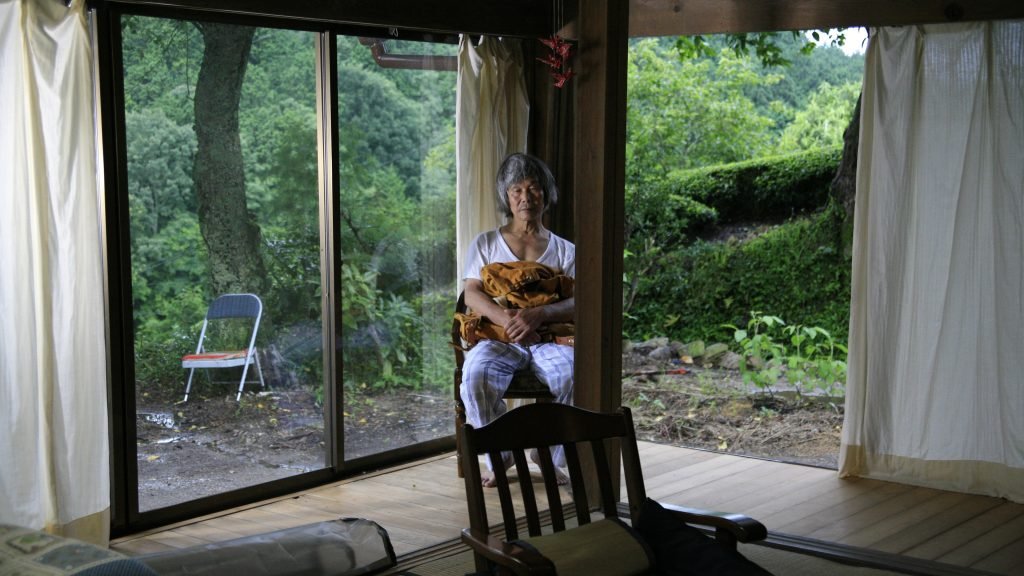
As noted in Sense of Place, ‘The Mourning Forest presents the issue of loss. In respectful silence, it raises the question of getting over the death of the Other, of going on without them.’[2] The Mourning Forest introduces two central characters: Shigeki, an elderly man who is grieving the loss of his wife, and Machiko, a caregiver coming to terms with the death of her young son. Their mutual sorrow is initially expressed through silence and distance, but becomes more embodied during a pivotal journey into the forest, which begins after Shigeki abruptly runs off following a car breakdown. This shift marks a symbolic departure from structured caregiving into a raw, elemental space of healing. As the text elaborates, ‘The forest is not just a projection of nature, or a poetic communion with the elements; it is a vital distancing from the present that makes it possible to dismiss ‘the tragic character of death and grief.’[3] The forest thus becomes ‘a spiritual reserve, a place where the dead can be summoned, where a different relationship to mortality can be achieved and, therefore, where the living can find the strength to go on.’[4] The evolving bond between Shigeki and Machiko that is expressed through non-erotic, tactile closeness offers an alternative, embodied mode of mourning. In the waterfall scene, as the water crashes onto Shigeki, Machiko cries out in pain, prompting him to turn and return to her. This moment, at once visceral and symbolic, signals a mutual acknowledgment of loss and a tentative return to the world of the living. By the film’s end, Shigeki’s act of mixing himself with the soil suggests not death, but spiritual reintegration. Kawase’s approach reframes grief as a process of natural attunement, expressed not in words but in presence and physical connection.
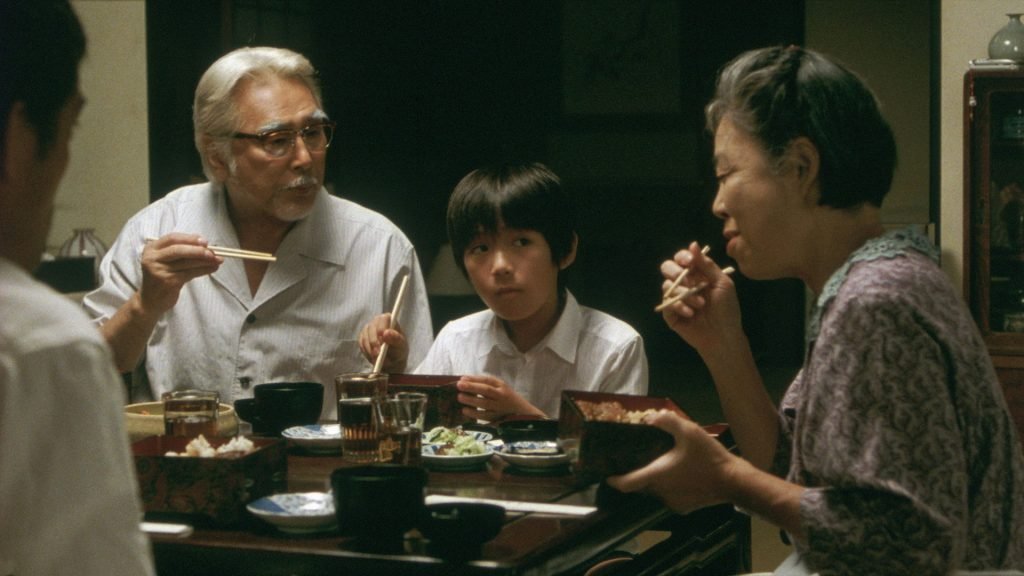
Still Walking, by Hirokazu Kore-eda, offers a domestically grounded counterpart to Kawase’s spiritual abstraction. As Kurt Osenlund writes, ‘Still Walking is a film about sorrow and secrets, memories and missed opportunities. But it is also a film about subtle rebirth and reconciliation.’[5] The film follows a family commemorating Junpei, a son who died years earlier saving another’s life. Unlike Kawase’s immersive naturalism, Kore-eda embeds grief in ritual and routine, which is seen most clearly in the annual family gathering, where the past quietly haunts everyday gestures. In one key scene, the family invites Yoshio, the man Junpei saved, to join them. Toshiko (the mother) asks him to return annually, not out of kindness but as she mentions, she doesn’t want him to forget Junpei and his sacrifice “in just a dozen years”, as Toshiko puts it. Her words reveal how mourning has hardened into bitterness, transforming ritual into an act of emotional coercion. The family dynamic is defined by subtle wounds: the father’s disdain for his surviving son, who fails to live up to Junpei’s legacy, and the unspoken resentments that hang over shared meals. As Brandon Wee writes in Cinema Scope, ‘…not only have they [the Yokoyamas] been unable to find closure to their bereavement, [they] are in tacit agreement that moving on isn’t an option.’[6] The symbolic appearance of a yellow butterfly, which the mother interprets as the spirit of Junpei, suggests that the deceased remains present within the emotional fabric of the family. As Wee observes, Junpei is ‘a deceased character who won’t stay dead.’ In this context, mono no aware is reflected in the quiet endurance of memory—grief that coexists with domestic life, never fully resolved, yet never overwhelming it either.
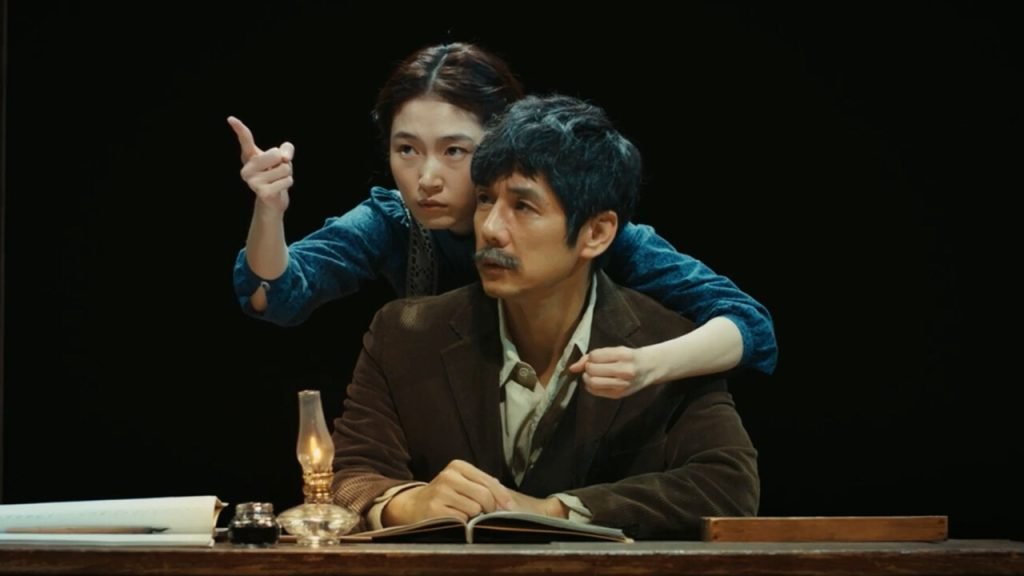
In Drive My Car, Ryusuke Hamaguchi explores grief through language, silence, and performance. The protagonist, Yūsuke Kafuku, a theatre director, struggles with the sudden death of his wife Oto, whose infidelity he only discovers after her passing. Rather than confront his sorrow directly, Kafuku immerses himself in a multilingual stage production of Uncle Vanya, using the rehearsal process as a form of indirect emotional processing. He repeatedly listens to a cassette recording of Oto reading the play’s lines, responding aloud with his own, preserving her voice as part of his working process. This ritual becomes a site of both comfort and pain, illustrating how grief clings to the rhythms of routine and the desire to hear the dead again. At one point, Kafuku asks his driver, Misaki, if it’s strange that he still listens to Oto’s recording; she replies, simply, that it is not. Misaki herself is grieving the loss of her mother, and this quiet exchange reflects the film’s deeper belief that grief binds the living across difference and distance, not through dramatic disclosure but through shared silences and gestures of recognition. In one pivotal scene, Kafuku performs opposite a mute Korean actress who communicates entirely through sign language. Her expressive movements, juxtaposed with his restrained vocal delivery, create a moment of non-verbal emotional clarity, offering a powerful counterpoint to Kafuku’s internalised mourning. The car itself becomes a mobile confessional, where silences and fragmented conversations form the emotional heart of the film. As in The Mourning Forest and Still Walking, the dead persist, not as ghosts but as absences that shape every interaction, every pause. Across these three films, mourning is neither resolved nor suppressed. Instead, it is spatialised, embodied, and ritualised, whether in communion with nature, in annual family rites, or in the rhythms of artistic rehearsal. These works collectively resist Western notions of emotional closure, embracing a cyclical and culturally grounded understanding of grief. Mourning is not something to overcome, but something to live with—slowly, silently, and sometimes beautifully.
The aesthetic landscape of contemporary Japanese art cinema is marked by a deliberate slowness, minimalism, and a refusal to adhere to conventional narrative expectations. These formal strategies reflect broader philosophical and cultural concerns, including a sensitivity to the passage of time, the weight of memory, and a reverence for the everyday. Deleuze’s conception of the time-image offers a useful critical framework here, as it legitimises a modernist cinematic mode characterised by ‘observant and errant characters, elliptical and dedramatised narrative structures, minimalist mise en scène, and/or the sustained application of elongated and self-reflexive temporal devices such as the long take.’[7]These traits are distinctly evident across The Mourning Forest, Still Walking, and Drive My Car, films which share a commitment to exploring temporality not through action, but through duration, fragmentation, and stillness. Naomi Kawase’s The Mourning Forest exemplifies many of these qualities through both narrative ellipsis and visual restraint. The film often withholds causal information, producing a fragmented narrative flow that mirrors the characters’ emotional states. The audience is never fully told why Machiko takes Shigeki on the drive that ultimately leads them into the forest, nor is it shown how their vehicle ends up abandoned in a roadside ditch. These narrative absences invite interpretive engagement, situating the viewer not as a passive consumer but as an active participant in the film’s emotional and temporal unfolding. This strategy resonates with Deleuze’s time-image, in which time is no longer subordinated to movement or action but is allowed to emerge on its own terms, often through moments of suspension or disjunction. Moreover, Kawase’s film embraces what has been identified as a defining narrative trait of the art film: ‘With the open and arbitrary ending, the art film reasserts that ambiguity is the dominant principle of intelligibility, that we are to watch less for the tale than the telling, that life lacks the neatness of art and this art knows it.’[8] The Mourning Forest ends not with resolution but with a ritualistic image of Shigeki lying down in the earth that gestures toward emotional reckoning rather than closure. This wordless, understated moment exemplifies the film’s openness, reflecting Kawase’s trust in the viewer to find meaning through ambiguity and to experience grief as an ongoing, elusive process rather than a resolved narrative arc.
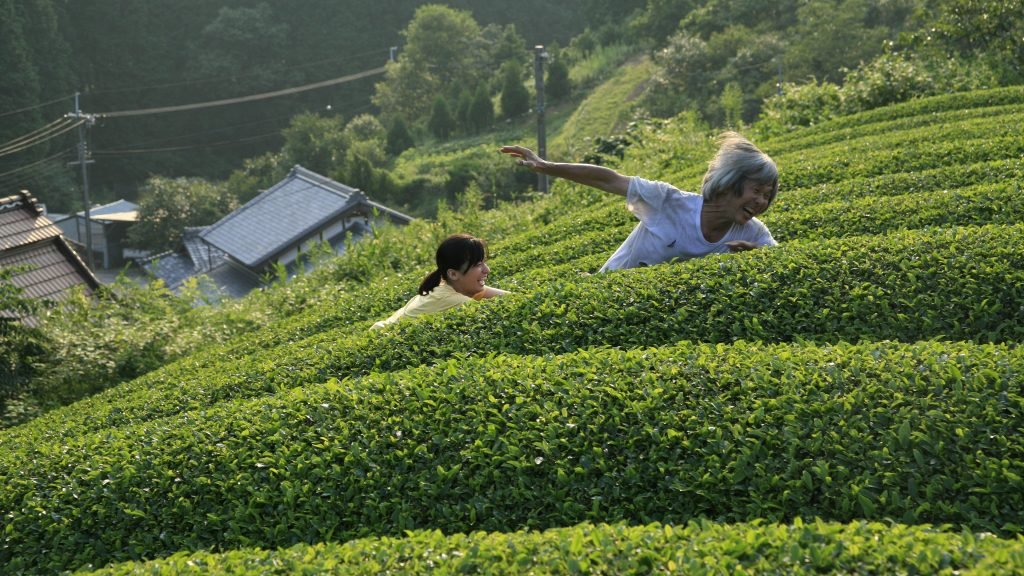
Formally, The Mourning Forest draws on André Bazin’s notion that the long take maintains ‘the integrity of time and space’, allowing the viewer to experience events with minimal manipulation.[9]Kawase’s restrained visual style exemplifies Bazin’s documentary aesthetic, which reflects ‘a reverence for real life’ by privileging observation over intervention and presenting reality in its temporal fullness. Her camera is often handheld, following characters at an intimate, observational distance. As Maury describes it, ‘The camera’s slow, tactile movements seem to brush up lightly against the world, and all living things’ vital vibrations become perceptible.’[10] This tactile visual approach aligns with Kawase’s spiritual outlook, where the landscape itself seems to breathe with memory, and where nature functions not merely as backdrop, but as an active agent of mourning and renewal.
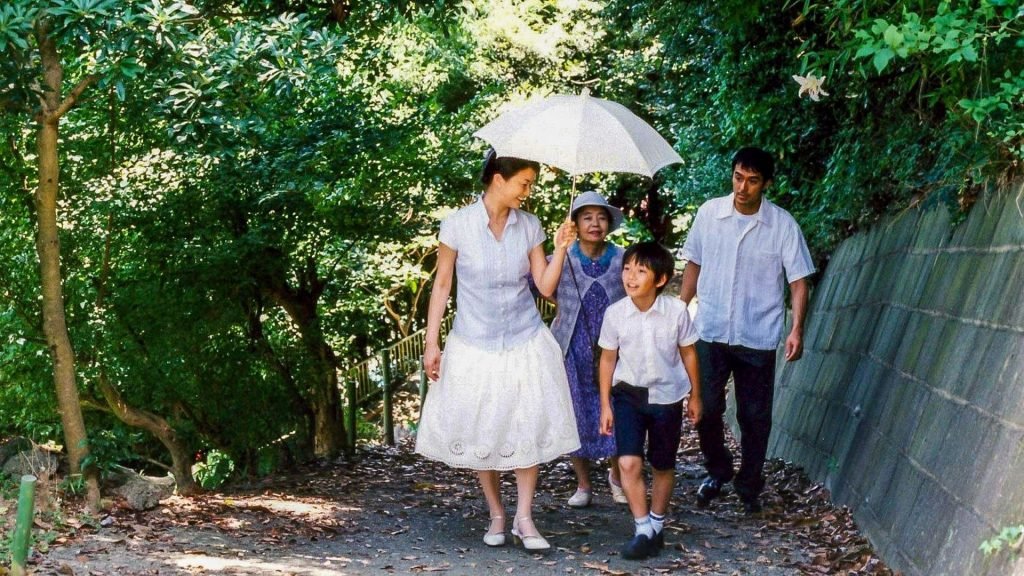
Hirokazu Kore-eda’s Still Walking offers a contrasting yet complementary aesthetic, one grounded in static long takes and observational realism. Kore-eda has explained his approach by stating, ‘Movies do not exist to judge individuals, and directors are not God or judges… instead, the audience will bring the issue back to their own daily lives to think about it again and again.’[11] This humility of perspective is reflected in the film’s refusal to impose narrative judgement or dramatic resolution. Instead, Kore-eda’s use of the long take and fixed camera positions allows the mundane gestures of family life such as eating, preparing food, walking, cleaning to unfold with quiet dignity and meaning. These formal decisions are deeply tied to Kore-eda’s thematic concerns, especially his focus on grief, memory, and intergenerational dynamics. In Still Walking, the long takes do not heighten dramatic tension but gently stretch time, allowing sorrow and love to coexist in the domestic rituals that anchor the Yokoyama family. As you watch the family share watermelon or fold laundry, the emotional undercurrents of loss become palpable not through dialogue, but through the spatial relationships, glances, and silences held within the frame. This approach aligns with the tradition of mono no aware, capturing the ephemeral beauty of daily life and the gentle ache of things passing. While both Kawase and Kore-eda make extensive use of the long take, they differ in how they deploy it. Kawase’s handheld camera conveys intimacy and spiritual immediacy, whereas Kore-eda’s static frames evoke objectivity and contemplation. In this sense, Kore-eda’s aesthetic bears the imprint of Ozu, especially in his exploration of domestic sorrow and his reverence for ordinary routines. Critics have noted that Still Walking is perhaps the Kore-eda film closest to Ozu, not only in its aesthetic minimalism but also in its quiet yet profound emotional reach.
Drive My Car situates itself firmly within this aesthetic lineage while also expanding its thematic and narrative scope. Hamaguchi’s use of extended silences, careful framing, and meditative pacing aligns the film with the traditions of slow cinema. David Bordwell and Kristin Thompson, writing in their blog Observations on Film Art, describe a ‘polarized film culture: fast, aggressive cinema for the mass market and slow, more austere cinema for festivals and arthouses.’[12] Drive My Car clearly belongs to the latter, as it builds its emotional power not through dramatic revelations but through accumulated quiet moments.
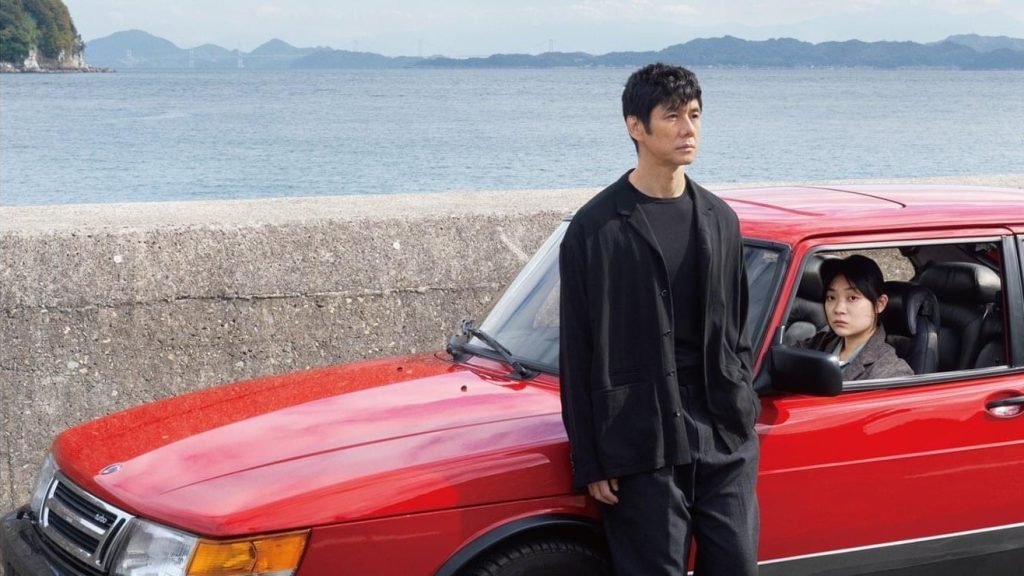
One of the most striking formal choices in the film is the use of the long take within the confined space of the red Saab, where Kafuku listens to his deceased wife’s recorded voice delivering lines from Uncle Vanya. These repeated listening sessions serve both as rehearsal and mourning ritual, allowing grief to surface indirectly through routine. When he asks his driver, Misaki, if this habit is strange, she assures him it is not—a moment of shared recognition made more poignant by the fact that Misaki is also coping with unresolved loss. This understated exchange illustrates how the long take and minimalist mise en scène allow emotional depth to emerge from what is left unsaid.
Beyond narrative and performance, Japanese art cinema frequently employs non-professional actors and physical environments like forests, domestic interiors, and liminal spaces, not merely as backdrops but as integral elements of the films’ emotional and philosophical framework. In The Mourning Forest, the use of non-actors lends a documentary-like realism, grounding the film in lived experience and emotional sincerity. The natural world, particularly the forest, functions as a dynamic presence rather than a passive setting. It absorbs and reflects the characters’ grief, becoming a site of spiritual reckoning and quiet transformation. As one reviewer observes, ‘The weather is a character: usually, it’s hot and sweaty, with thunderstorms arriving, oft blowing in with due symbolism.’[13] In Kawase’s film, such atmospheric details are not incidental; they embody shifting emotional currents and echo the characters’ internal states, reinforcing nature’s role as both witness and participant in their mourning. Similarly, in Still Walking, the home space operates as a vessel for generational sorrow and unspoken tensions, just as the car in Drive My Car becomes a vessel for repetition, performance, and emotional reckoning. Together, these films illustrate how contemporary Japanese art cinema achieves its profound affective resonance not through spectacle or dramatic catharsis, but through a meticulous attention to time, space, and the small gestures that make up human life. They resist resolution, instead inviting the viewer into a shared temporality. One that mirrors mourning itself: slow, cyclical, and deeply attentive.
Across Drive My Car, Still Walking, and The Mourning Forest, the failure of verbal communication becomes not just a theme but a structuring device, foregrounding silence, ritual, and environment as alternative forms of emotional expression. These films suggest that where language fails, truth often emerges through gesture, atmosphere, and shared presence. In Drive My Car, miscommunication spans languages and grief. Yūsuke listening to his late wife’s recorded reading of Uncle Vanya, as if clinging to the remains of a relationship he never fully understood. His driver Misaki reply to it shows how their bond is forged not through confession, but through mutual, often wordless recognition. Emotional truth reveals itself through pauses and performance, not dialogue. In Still Walking, Hirokazu Kore-eda crafts a family haunted by loss yet unable to speak of it. The repressed sorrow surrounding Junpei’s death simmers beneath the annual family gathering. Kore-eda ‘uses warm and long takes to eliminate the conflicts between family members,’ inviting the audience into moments where affection and disappointment coexist silently, beneath the surface.[14] The Mourning Forest, meanwhile, strips language back to its barest form. ‘Machiko Ono and Shigeki Uda disappear into a nearby forest… then find catharsis following the recent deaths of her son and his wife.’[15] Here, nature becomes the only expressive medium through being tactile, immersive, and ancient. As the film’s title draws on ‘mogari’, referring both to mourning and the emotional resonance of the dead, Kawase renders communication spiritual rather than verbal.[16] Together, these films find resonance in restraint, elevating silence and stillness as deeply communicative modes of cinematic expression.
These films both align with and subtly subvert Western conceptions of art cinema. On the one hand, they reinforce familiar markers such as slow pacing, narrative ambiguity, long takes, and introspective characters—qualities famously theorized by Deleuze and embraced in European modernist cinema. Yet they also challenge Eurocentric frameworks by embedding these techniques within distinctively Japanese aesthetic and philosophical traditions. Concepts like mono no aware (the pathos of things), rituals of remembrance, and a reverence for silence and nature infuse the films with a cultural specificity that resists easy assimilation into Western norms. While Western art cinema frequently associates the ‘lack of communication’ with a sense of ‘contemporary alienation’, these Japanese works evoke a quieter sensibility, one of restraint and emotional continuity.[17] Here, ambiguity does not signify disorder but instead gestures toward a contemplative and spiritually grounded way of engaging with the world.
Contemporary Japanese art cinema, as exemplified by The Mourning Forest, Still Walking, and Drive My Car, masterfully fuses aesthetic minimalism with emotional depth to articulate experiences of grief, loss, and connection that are both culturally specific and universally resonant. Through subdued performances, long takes, fragmented narratives, and an embrace of silence and nature, these films invite viewers into a contemplative space where the weight of the unspoken becomes central. They do not offer resolution in the traditional sense, but instead linger in ambiguity, trusting the audience to find meaning through mood, gesture, and absence. These works affirm core characteristics of global art cinema, including narrative gaps, reflective themes, and a fluid approach to time, while grounding them in Japanese traditions such as mono no aware, Zen aesthetics, and rituals of mourning. In doing so, they present an alternative model of cinematic expression, one that resists both emotional spectacle and narrative finality in favour of subtler, slower, and more reflective engagement. The emotional and philosophical power of these films lies in their quiet confidence: they trust silence to speak, landscapes to carry memory, and everyday gestures to contain entire emotional worlds. As Japan continues to grapple with generational shifts, technological change, and evolving social structures, future filmmakers may further transform this aesthetic language, perhaps integrating these minimalist traditions with more hybrid or experimental forms. Yet, the echo of silence that defines this current generation of Japanese art cinema will likely remain a vital influence, continuing to offer viewers around the world a cinematic space to feel, reflect, and simply be.
Bibliography
- Maury, Corinne. The Sense of Place in Contemporary Cinema. Edinburgh University Press, 2022. ProQuest Ebook Central,
- Ehrlich, Linda C. The Films of Kore-Eda Hirokazu : An Elemental Cinema, Springer International Publishing AG, 2020. ProQuest Ebook Central, http://ebookcentral.proquest.com/lib/kentuk/detail.action?docID=6002073.
- Karatsu, Rie. “Questions for a Women’s Cinema: Fact, Fiction and Memory in the Films of Naomi Kawase.” Visual Anthropology Vol. 22, Issue 2/3 (2009): p167-181. 15p.
- De Luca, ed. Tiago, ed. Barradas Jorge, Nuno, ed. Slow Cinema. Edinburgh University Press, 2022.https://www.degruyterbrill.com/document/doi/10.1515/9780748696031/html, De Gruyter Brill.
- Zhang, Cong .Xu, Jinbo. “Documentary-Warm-Restrained: An Interpretation of the Aesthetic Style of the Long Take in Hirokazu Koreeda’s Films.” Frontiers in Art Research Vol. 5, Issue 14 (2023): 24-29.
- Carew, Anthony. “ART WITH THE RIGHT INGREDIENTS: An and the Films of Naomi Kawase.” Metro : Media & Education Magazine, Issue 188 (2016): pp. 48-54.
- Bordwell, David. “The Art Cinema as a Mode of Film Practice.” Film Criticism 4, no. 1 (1979): 56–64. http://www.jstor.org/stable/44018650.
- Schrader, Paul. Transcendental Style in Film : Ozu, Bresson, Dreyer, University of California Press, 2018. ProQuest Ebook Central, http://ebookcentral.proquest.com/lib/kentuk/detail.action?docID=5344392.
- Schrader, Paul. Transcendental Style in Film : Ozu, Bresson, Dreyer. Berkeley: University of California Press, 2018. https://ebookcentral.proquest.com/lib/kentuk/detail.action?docID=5344392# ProQuest Ebook Central.
- David Desser ed. A Companion to Japanese Cinema, John Wiley & Sons, Incorporated, 2022. http://ebookcentral.proquest.com/lib/kentuk/detail.action?docID=6961707 ProQuest Ebook Central.
[1] Schrader, Paul. Transcendental Style in Film : Ozu, Bresson, Dreyer. Berkeley: University of California Press, 2018.pp. 58. https://ebookcentral.proquest.com/lib/kentuk/detail.action?docID=5344392# ProQuest Ebook Central.
[2] Corinne Maury, The Sense of Place in Contemporary Cinema. (Edinburgh University Press, 2022), pp. 98. https://ebookcentral.proquest.com/lib/kentuk/detail.action?docID=30256503 , ProQuest Ebook Central.
[3] Corinne Maury, The Sense of Place in Contemporary Cinema. pp. 101.
[4] ibid
[5] Ehrlich, Linda C, The Films of Kore-Eda Hirokazu : An Elemental Cinema. (Springer International Publishing AG, 2020), pp. 59. http://ebookcentral.proquest.com/lib/kentuk/detail.action?docID=6002073, ProQuest Ebook Central.
[6] Ehrlich, Linda C, The Films of Kore-Eda Hirokazu : An Elemental Cinema, pp. 59.
[7] De Luca, ed. Tiago, ed. Barradas Jorge, Nuno, editor, Slow Cinema. (Edinburgh University Press, 2022), pp. 09. https://www.degruyterbrill.com/document/doi/10.1515/9780748696031/html , De Gruyter Brill.
[8] David Bordwell. “The Art Cinema as a Mode of Film Practice.” Film Criticism 4, no. 1 (1979): 61. http://www.jstor.org/stable/44018650.
[9] Cong Zhang, Jinbo Xu. “Documentary-Warm-Restrained: An Interpretation of the Aesthetic Style of the Long Take in Hirokazu Koreeda’s Films.” Frontiers in Art Research Vol. 5, Issue 14 (2023): 24.
[10] Corinne Maury, The Sense of Place in Contemporary Cinema. (Edinburgh University Press, 2022), pp. 101. https://ebookcentral.proquest.com/lib/kentuk/detail.action?docID=30256503 , ProQuest Ebook Central.
[11] Cong Zhang, Jinbo Xu. “Documentary-Warm-Restrained: An Interpretation of the Aesthetic Style of the Long Take in Hirokazu Koreeda’s Films.” Frontiers in Art Research Vol. 5, Issue 14 (2023): 26.
[12] De Luca, ed. Tiago, ed. Barradas Jorge, Nuno, editor, Slow Cinema. (Edinburgh University Press, 2022), pp. 02. https://www.degruyterbrill.com/document/doi/10.1515/9780748696031/html , De Gruyter Brill.
[13] Carew, Anthony. “ART WITH THE RIGHT INGREDIENTS: An and the Films of Naomi Kawase.” Metro : Media & Education Magazine, Issue 188 (2016): 52.
[14] Cong Zhang, Jinbo Xu. “Documentary-Warm-Restrained: An Interpretation of the Aesthetic Style of the Long Take in Hirokazu Koreeda’s Films.” Frontiers in Art Research Vol. 5, Issue 14 (2023): 26.
[15] Carew, Anthony. “ART WITH THE RIGHT INGREDIENTS: An and the Films of Naomi Kawase.” Metro : Media & Education Magazine, Issue 188 (2016): 51.
[16] David Desser ed. A Companion to Japanese Cinema, John Wiley & Sons, Incorporated, 2022.pp. 258, 265. http://ebookcentral.proquest.com/lib/kentuk/detail.action?docID=6961707 ProQuest Ebook Central.
[17] David Bordwell. “The Art Cinema as a Mode of Film Practice.” Film Criticism 4, no. 1 (1979): 57. http://www.jstor.org/stable/44018650.