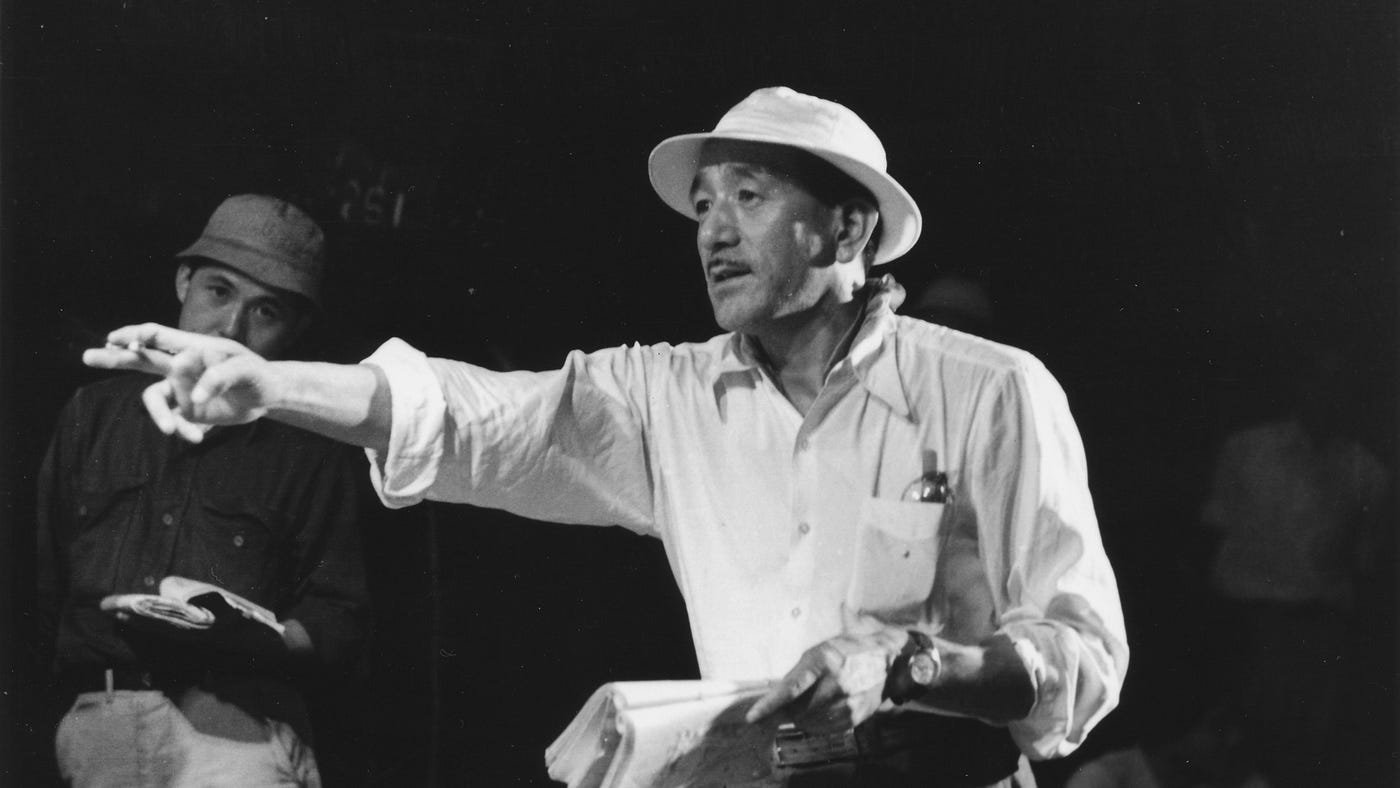
‘In traditional Oriental art… an artist would spend his life perfecting certain brush strokes, painting and repainting the same scene. Ozu was also a perfectionist; he spent his life perfecting a small repertoire of shots, filming and refilming the same story. The end product of a Zen painter’s career could be a single painting; similarly, the end product of Ozu’s career can be described as a single film’ (Schrader 2018, pp. 62). Ozu’s post-war films are a profound exploration of the tension between modernity and tradition, reflecting the societal changes in mid-20th century Japan. Through his minimalist style and focus on the everyday life, he captures the quiet struggles of individuals and families navigating the conflict between evolving values and enduring cultural roots. This essay explores the principal aesthetic and thematic characteristics of Yasujirõ Ozu’s cinema through an analysis of three post-war films—Late Spring (1949), Early Summer (1951), and Tokyo Story (1953). These films exemplify Ozu’s minimalist style, his exploration of familial relationships, and his poignant meditation on impermanence and societal change.
‘Richie writes that, Ozu is primarily the artist of mono no aware for which he gives Tamako Niwa’s translation, ‘sympathetic sadness’: the end effect of an Ozu film is a kind of resigned sadness, a calm and knowing serenity which maintains despite the uncertainty of life and the things of this world’ (Schrader 2018, pp. 63). The theme of mono no aware (the bittersweet awareness of life’s impermanence) is deeply woven into Tokyo Story, especially in the final scenes, where the father sits alone after his children depart following the funeral. In Late Spring, Noriko’s wedding carries a poignant sense of finality, as her departure signifies a turning point in her father’s life. The closing shot, showing him peeling an apple in their now-empty home, subtly captures the film’s reflection on the inevitability of change and the quiet sorrow of letting go. In the closing scene of Early Summer, Noriko’s parents watch a bride walk past, reflecting on which family she might be joining. This brief moment, filled with a quiet sense of nostalgia, subtly echoes their own daughter’s recent marriage and the changes it has brought to their family. In all three films, Ozu sensitively depicts life’s fleeting nature, using quiet, reflective endings to acknowledge the inevitability of change. Through stillness and contemplation, he conveys a poignant acceptance of life’s cycles—love, loss, and separation.
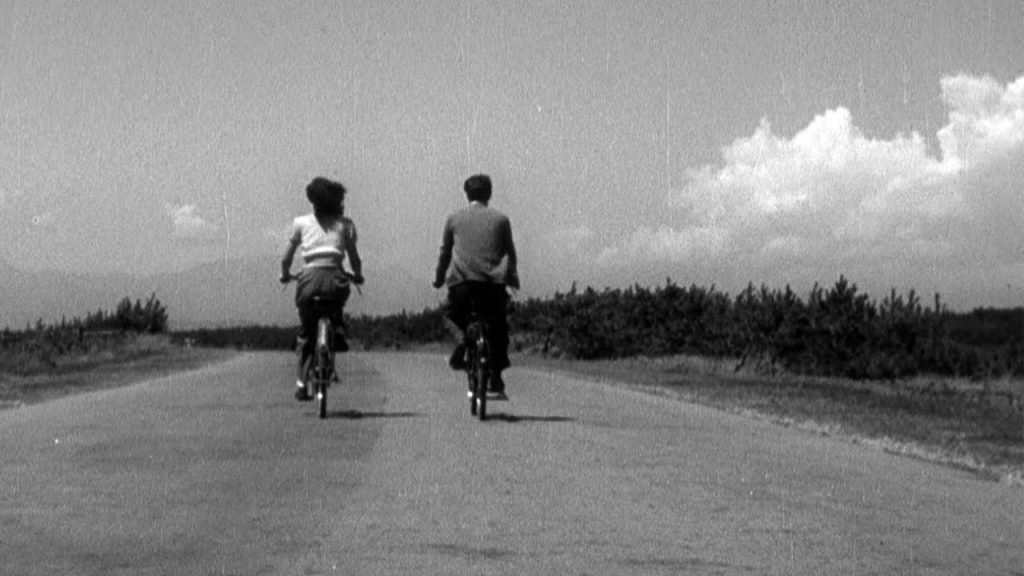
‘Ozu focuses on the tensions between the home and the office, the parent and the child, which are extensions of the tensions between the old and new Japan, between tradition and Westernization, and—ultimately—between man and nature’ (Schrader 2018, pp. 48). ‘Late Spring takes a liberal view of family relations and marriage’ (Bordwell 1988, pp. 307). The conflict between tradition and modernity is embodied in Noriko’s reluctance to marry, but her father’s insistence that she conform to societal expectations reflects the broader tensions of post-war Japan, where traditional values clashed with modern aspirations. Beneath this, however, lies a deeper tension: the father’s desire for his daughter to lead her own life and find a partner, as he recognizes he won’t always be there for her. In Early Summer, the conflict between tradition and modernity is clear when Noriko chooses her own husband instead of accepting an arranged marriage. Her decision reflects the evolving gender roles in post-war Japan, while her family’s surprised and concerned reactions highlight the persistence of traditional values. By acting impulsively, excluding her family from the decision, and ‘putting Yabe in an awkward position by giving him no say in the matter’, ‘she flies in the face of tradition’ (Bordwell 1988, pp. 319). ‘Where Late Spring promises a synthesis of modernity and tradition, Early Summer posits a fragile modernity, one which recognizes that a ‘love match’ is still chancy and which may spring from a desire to recapture a prewar innocence’ (Bordwell 1988, pp. 319).
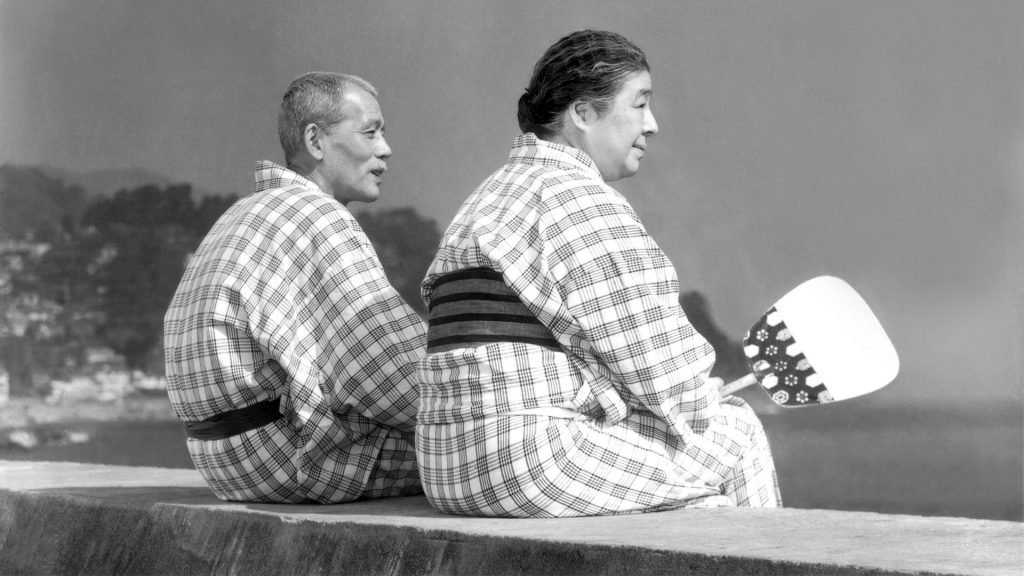
In Tokyo Story, the contrast between rural and urban life emphasizes the cultural and generational shifts in post-war Japan. The parents’ journey from their small village to Tokyo reveals these changes, shown through their children’s varying receptions and the parents’ discomfort at a beachside hotel. The generational divide is shown with both empathy and critique, as the younger generation is not demonized, with Noriko, the widowed daughter-in-law, offering more care than their own children. Rather, the film highlights the natural drift that occurs as families grow apart in the face of modern, fast-paced city life. ‘The train is linked to commuters Noriko and Koichi, symbolizing the modern life of Tokyo, while the grandfather represents the ability of Japanese tradition to accept whatever changes life may bring’ (Bordwell 1988, pp. 319).
Ozu’s post-war films carry universal themes that resonate with audiences worldwide. Tokyo Story, regarded as an authentic portrayal of postwar Japan, transcends its cultural context to appeal to a broad audience. In Tokyo Story, the elderly parents’ sense of alienation and the children’s focus on their own lives highlight universal challenges of family and aging. Likewise, Noriko’s struggle to balance personal desires with familial duties in Late Spring and Early Summer resonates with audiences across cultures and generations. ‘Ozu’s theme of ‘parental disillusionment’, evident in Early Summer is echoed in the parents’ belief that their children are “better than average,” much like the older Hirayamas in Tokyo Story(Bordwell 1988, pp. 319). Over time, this idea expands into a deeper, more universal understanding that life often does not meet our expectations.
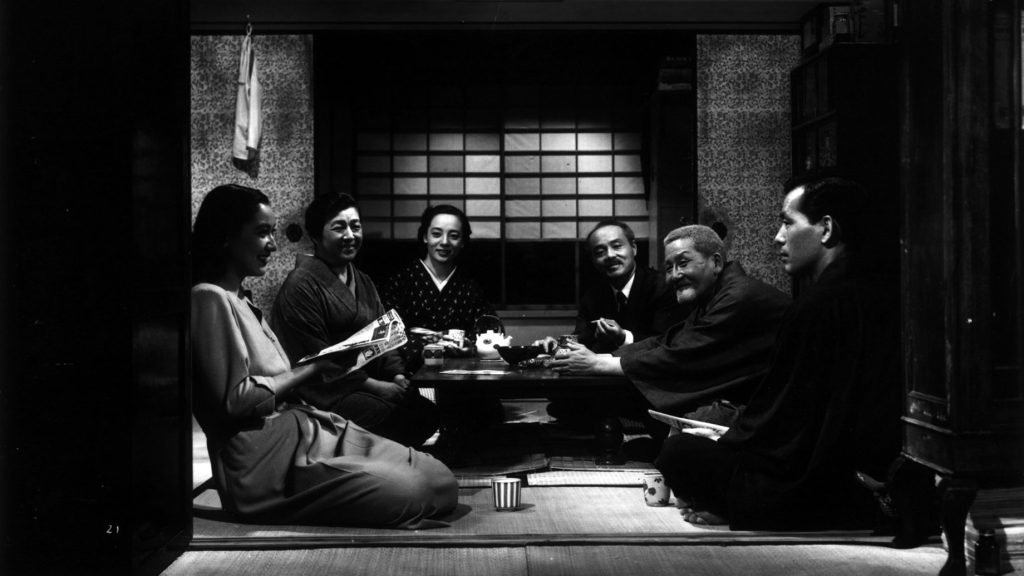
Ozu’s cinematic style is defined by several key aesthetic characteristics, including the use of a static camera, the tatami shot, pillow shots, and a thoughtful approach to mise-en-scène and recurring motifs. These elements work together to create the distinctive visual and emotional tone of his films. Ozu’s minimalist style is on full display in these films, where the restrained dialogue and sparse plot create a space for the viewer to engage deeply with the unspoken emotions between Noriko and her father. Ozu’s camera, set at the level of a person sitting on a tatami mat about ‘three feet above the ground’, adopts a traditional, passive perspective akin to the ‘Noh theatre’ or a ‘tea ceremony’. (Schrader 2018, pp. 51).This is particularly evident in the domestic scenes of Late Spring, Early Summer, and Tokyo Story, where the tatami shot emphasizes intimate interactions between Noriko and her family. The low angle creates a sense of closeness, drawing the viewer into these reflective, quiet moments of domestic life.
Ozu’s static camera, rarely moving, is particularly impactful in Tokyo Story during the scene where the elderly parents sit alone, quietly realizing their neglect. The stillness intensifies their emotional isolation. As Shinoda noted, Ozu’s stationary camera captures a ‘profound sense of life’s movement’. ‘Sato Tadao noted that Ozu avoids ‘lateral movements or partial views’, instead favouring ‘full-face shots’ and ‘forward-backward motions’ (Desser 1997, pp. 65). The camera’s focus on ‘what is directly in front’ of it mirrors how viewers are drawn to simple, ‘unembellished’ moments (Desser 1997, pp. 65). This fixed approach in Late Spring, Early Summer, and Tokyo Story highlights subtle expressions, silences, and everyday rhythms, allowing emotional depth to unfold slowly while reinforcing themes of transience and the passage of time. Ozu also leaves space empty when a character exits, letting the void linger.
Ozu’s use of mise-en-scène, particularly through deep space composition and the positioning of props, reflects characters’ inner lives. In Early Summer, his focus on domestic spaces like the family dining room or Noriko’s workplace mirrors the rhythms of everyday life, with these spaces symbolizing the characters’ emotional states—from the warmth of family moments to the quiet tension of unspoken conflicts. In Tokyo Story, Ozu uses ‘objects, things and words’ in unexpected ways to highlight the passage of time. In this sense, we could argue that the mise-en-scène of Tokyo Story carries a melodramatic quality, as noted by Mulvey (Miyao 2021, pp. 63). Ozu imbues ordinary objects with symbolic significance through framing, editing, and music, turning them into signifiers of deeper meaning (Miyao 2021, pp. 63). The vase in Late Spring is a prime example of this. Clocks and watches, while part of daily life, accumulate “semiotic value” throughout the film, subtly marking the passage of time. (Miyao 2021, pp. 63). Ozu’s careful use of shot/reverse-shot editing often keeps timepieces off-screen, emphasizing time’s inevitable march, especially with the elderly couple. In contrast, Noriko is rarely shown with such objects. A tour scene further highlights time’s passage, with the Imperial Palace symbolizing the past and the modern NHK tower representing the future. (Miyao 2021, pp. 63).
In Late Spring, Ozu’s use of pillow shots, such as the recurring image of a tea kettle, empty corridor, or buildings create quiet interludes that allow the audience to reflect on the film’s emotional depth. These seemingly mundane images are not merely aesthetic choices but serve a narrative function, emphasizing themes of transience and contemplation. Similarly, in Tokyo Story and Early Summer, Ozu employs pillow shots to punctuate key moments, reinforcing the passage of time and the unspoken emotions within family dynamics. Ozu’s pillow shots create a meditative rhythm, balancing continuity and discontinuity to deepen emotional resonance. These moments of stillness slow time, inviting reflection while subtly disrupting narrative flow to evoke contemplation and transience.
Elliptical storytelling is a key feature of Ozu’s cinema, with crucial events omitted and character motivations subtly implied rather than explicitly shown. In Late Spring, the narration withholds Noriko’s thoughts, leaving both Somiya and the audience unaware that Hattori is engaged until it is revealed. This absence of interpersonal development suggests none occurred, yet Noriko’s later decision to marry Yabe hints that her feelings may have shifted. The film’s focus remains on Somiya, as even Noriko’s groom and wedding are left unseen, reinforcing Ozu’s restrained narrative style. In Tokyo Story, the most significant instance is the death of Tomiko, the elderly mother. Instead of dramatizing her final moments, Ozu skips directly to the aftermath, showing family members reacting to the news. This omission shifts the focus from the event itself to the impact it has on the family, reinforcing the film’s theme of impermanence. In Early Summer, Noriko’s unexpected decision to marry Yabe suggests that something during their search for the children may have given her a sense of comfort or affirmation. Since this moment remains unseen, her choice is accepted without judgment, emphasizing the power of omission in Ozu’s storytelling. His elliptical approach is emphasized by a fleeting moment of a bridal procession, which takes the place of Noriko’s unseen wedding.
‘The “hourglass structure” and the implied contrasts among characters are well-known elements of Tokyo Story, but there is an equally strong sense of continuity and cyclical motion at work in the film’ (Desser 1997, pp. 65). The cyclical structure of Early Summer is reflected in its seasonal transitions and recurring family gatherings, emphasizing life’s continuity despite change. Similarly, in Tokyo Story, the elderly couple’s journey—from Onomichi to Tokyo and back—mirrors the broader life cycle of departure, disappointment, and return, ending with the mother’s passing. In Late Spring, the father’s silent contemplation of a vase after Noriko’s departure symbolizes the unchanging patterns of life, where children grow up and parents are left behind. Ozu’s portrayal of cyclical time underscores both the transience of individual lives and the permanence of life’s rhythms. The ‘journey motif’, central to Tokyo Story, extends beyond physical travel through Tokyo, Atami, Osaka, and Onomichi, serving as a metaphor for life’s passage (Desser 1997, pp. 65). Trains, appearing at the film’s beginning and end, reinforce this theme of transition and impermanence.
While Late Spring, Early Summer, and Tokyo Story share many thematic and aesthetic similarities, each film offers a distinct perspective on Ozu’s central concerns. Late Spring focuses on the individual’s relationship to tradition, Early Summer explores the dynamics of a larger family unit, and Tokyo Storyreflects on the broader societal changes of post-war Japan. Together, these films form a powerful trilogy that encapsulates Ozu’s vision of life’s fleeting beauty and enduring resilience. Ozu’s films explore generational conflict, modernity vs. tradition, and humanism through elliptical storytelling, cyclical time, and minimalist style. Their enduring appeal lies in their quiet yet profound reflection on love, loss, and the passage of time, resonating across cultures and eras. In an age of noise and distraction, Ozu’s cinema offers a timeless refuge, reminding us to pause and find meaning in everyday life. As globalization and generational gap intensify the tension between tradition and modernity, his films remain deeply relevant, capturing the quiet struggles of individuals and families adapting to change. In Late Spring, Early Summer, and Tokyo Story, he reveals that the deepest truths are often found in the spaces between words, in the stillness of a room, and in the quiet resilience of the human spirit—reminding us that beauty and meaning are always present, if only we take the time to look.
Bibliography
- Schrader, P. (2018) Transcendental Style in Film : Ozu, Bresson, Dreyer. Oakland, California : University of California Press.
- Bordwell, D. (1988) Ozu and the poetics of cinema. London: British Film Institute.
- Desser, D. (1997) Ozu’s Tokyo Story. New York: Cambridge University Press.
- Miyao, D. (2021) ‘The melodrama of Ozu: Tokyo Story and its time’, Journal of Japanese & Korean Cinema, Issue 1, pp. 58-79.